


Key Takeaways
Section 213(d) of the Internal Revenue Code defines qualified medical expenses, and IRS Publication 502 is the working list most people use.
The CARES Act made over-the-counter medicines and menstrual care products HSA eligible without a prescription starting in 2020.
Gray-zone items like gym memberships or supplements qualify only with a doctor's letter of medical necessity tied to a diagnosed condition.
An audit-proof receipt shows merchant name, date, line-item description, and proof of payment; a card statement alone fails.
Thermal receipts fade within months, so photograph or scan every receipt within a week and store it in two places.
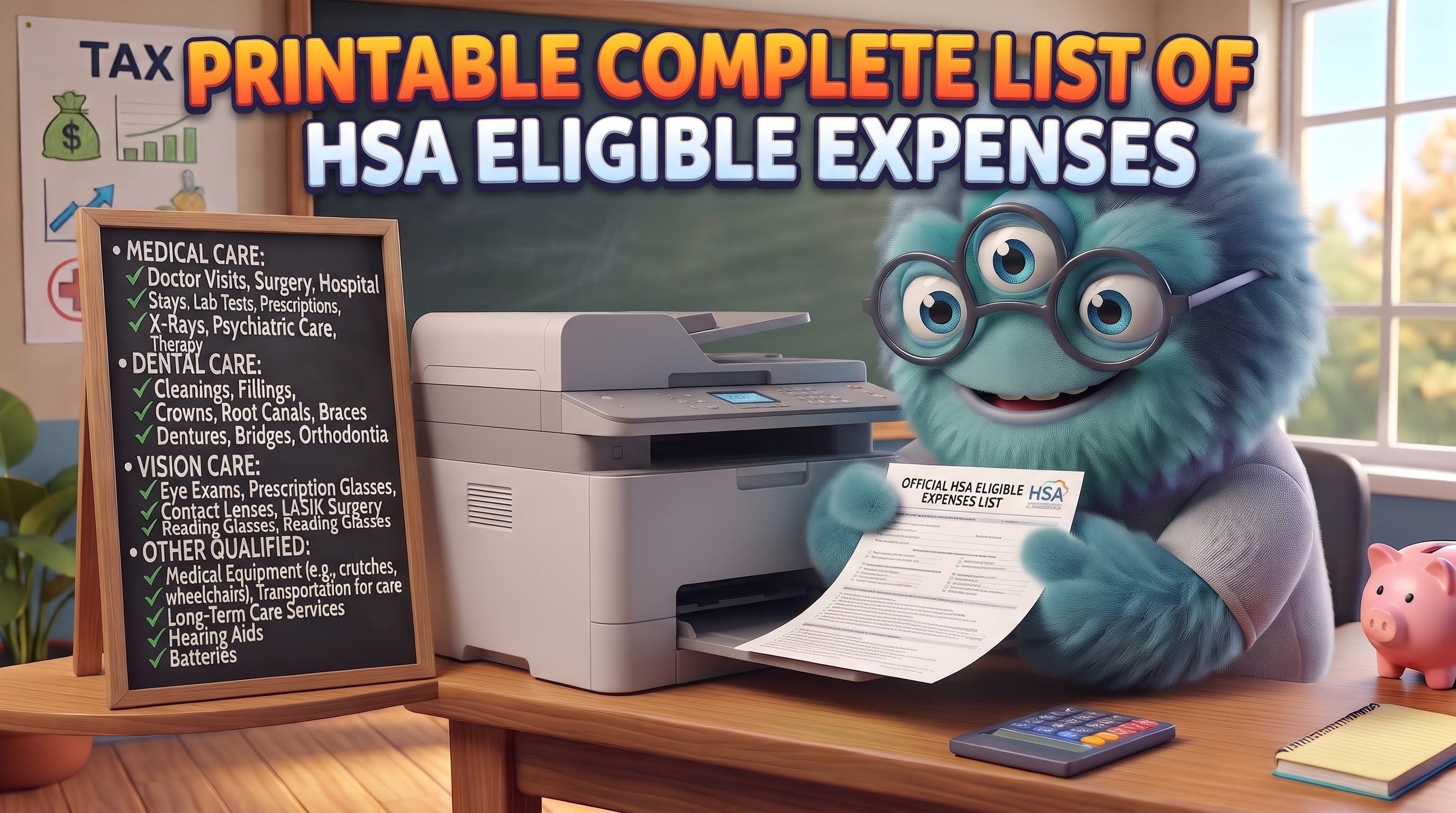
Below is a printable complete list of HSA eligible expenses, organized by IRS Section 213(d) category, with a caveat column flagging every item that needs a letter of medical necessity or administrator confirmation before you pay. Print it or save it as a PDF, keep it in your wallet or phone, and pair it with a receipt-documentation workflow built for the shoebox strategy: itemized records that survive a 20-plus-year audit window and thermal paper that fades in three months.
What counts as an HSA eligible expense under IRS Section 213(d)?
The statutory definition in plain English
Section 213(d) of the Internal Revenue Code defines qualified medical expenses: costs paid for the diagnosis, cure, mitigation, treatment, or prevention of disease, and for treatments affecting any part or function of the body. The IRS applies this statute to every reimbursement you take from your HSA, and IRS Publication 502 is the working list most people actually use. If an expense is not on the list and lacks a letter of medical necessity, treat it as ineligible.
Whose expenses count: you, your spouse, your dependents
Qualified expenses incurred by you, your spouse, and any dependents you claim all count, even if your spouse has separate coverage. That matters for the shoebox strategy: every eligible receipt you save today is a future tax-free reimbursement, so documentation needs to survive the decades until you reimburse yourself. Tools like SnapHSA exist to keep those records audit-ready without a long-term tracking burden.
Printable complete list of HSA eligible expenses, by 213(d) category
Print this, fold it, and keep it in your wallet or saved as a PDF on your phone. The caveat column matters more than the list itself: administrators apply Section 213(d) unevenly, and the item that sails through one HSA gets flagged at another. Verify before you swipe.
Medical care and treatment
Doctor, specialist, and urgent care copays and fees
Surgery, hospital services, and lab work
Chiropractic care and acupuncture
Physical therapy prescribed by a doctor
Mental health counseling and psychiatric care
Prescription eyeglasses, contact lenses, and hearing aids
Prescriptions and insulin
Prescription drugs of any kind
Insulin, without a prescription requirement
Birth control prescribed by a doctor
Dental and vision
Cleanings, fillings, crowns, root canals, and extractions
Orthodontia, including braces
Dentures
Eye exams, glasses, contacts, contact solution, and reading glasses
Over-the-counter items
Pain relievers, cold medicine, and allergy medication
Menstrual care products
Bandages, first-aid supplies, and reading glasses
Sunscreen SPF 15+
Travel, lodging, and insurance premiums
Mileage to and from medical appointments, at the IRS rate
Ambulance transport
Lodging while receiving treatment away from home
COBRA premiums and premiums paid while on unemployment
The caveat column
ItemVerify with your HSA administratorSunscreenSome require the SPF to be printed on the receiptMenstrual productsReceipt must show the item name, not just a SKUTravel mileageAsk whether they reimburse at the IRS rate or a flat rateLodgingDistance-from-hospital limits may applyMental health counselingSome flag certain providers as non-qualifiedContact solutionUsually fine, but bundled kits can be questioned
How to print or save the checklist
Print it, laminate a copy for your wallet, and save the PDF to the same folder where you file receipts. When you're standing in the Walgreens aisle deciding whether the bandages come out of the HSA card, the answer should take three seconds, not a forum search. The checklist is the point-of-purchase half of your system; the receipt capture half comes later in this article.
Which over-the-counter items became HSA eligible after the CARES Act?
The CARES Act, signed in March 2020, removed the prescription requirement for two groups of purchases: over-the-counter medicines and menstrual care products. Both now count as qualified medical expenses under Section 213(d), per IRS Publication 969.
OTC medicines no longer needing a prescription
Before 2020, aspirin, ibuprofen, allergy medication, and cold medicine needed a doctor's prescription to be reimbursable. Now you can buy them off the shelf and pay with your HSA or reimburse yourself later. Keep the itemized receipt showing the item name and amount, since a card-only statement is not audit-proof.
Menstrual care products
Tampons, pads, cups, and related supplies are eligible without a letter of medical necessity. This is a recurring grocery-aisle purchase, so capture the itemized receipt at checkout, not just the card slip.
What HSA expenses require a doctor's letter of medical necessity?
Some items sit in a gray zone under Section 213(d): eligible only when prescribed or recommended for a specific diagnosed condition. Common examples include weight-loss programs, smoking-cessation programs beyond the OTC products, home improvements like ramps or air conditioning installed for a medical reason, and certain supplements or vitamins.
Items that are eligible only with a diagnosis
If the item has a general health use but you're claiming it for a specific condition, treat it as conditional. General wellness purchases, like a gym membership for fitness, fail; the same membership prescribed for a diagnosed condition can pass.
What the letter of medical necessity must say
Ask your doctor for a letter stating the diagnosed condition, that the specific item or program treats it, and how it does so. Keep the letter with the itemized receipt, since the two together form the audit-proof pair. Check the letter's date against the purchase date, and confirm your HSA administrator accepts letters for that expense type before you pay.
Which common purchases are mistakenly assumed to be HSA eligible?
Cosmetic vs. medical
Teeth whitening, cosmetic surgery, and hair-growth treatments fail Section 213(d) unless they treat a specific medical condition. Botox for migraines can qualify with documentation; Botox for wrinkles cannot. The test is whether the expense treats or mitigates a diagnosed problem, not whether it improves health generally.
Items that fail even when health-related
Gym memberships, vitamins taken for general health, and most insurance premiums you already paid pre-tax through payroll are not reimbursable, because double-dipping a tax benefit triggers Form 8889 problems. Imported medications without FDA approval are also out. One real trap: OTC medicines were ineligible before 2020, but the CARES Act made them reimbursable without a prescription, along with menstrual care products (IRS Publication 502 guidance). Verify each borderline item with your HSA administrator before paying.
How do you verify an expense with your administrator before paying?
Three-step pre-purchase check
Check your administrator's eligible-expense list first, since some reject items the IRS allows. Then cross-reference IRS Publication 502 and Publication 969, which define qualified medical expenses under Section 213(d). If both sources agree, pay and save the itemized receipt.
Getting a written determination
For gray-area items like gym memberships tied to a diagnosis, ask your administrator for a written determination before you pay. Submit the item, price, and any letter of medical necessity through their review process. Keep the approval with the receipt so a Form 8889 reviewer years later sees the expense was pre-cleared. An emailed or lettered approval is worth more than a forum thread when the audit window is measured in decades.
How should you document HSA purchases for tax records?
What an audit-proof receipt must show
A receipt that survives a 20-year audit window needs four things: the merchant name, the purchase date, a line-item description of what you bought, and proof of payment. A card statement alone fails the itemization test, and a pharmacy printout that just says "pharmacy" fails the qualified-expense test. If an item sits in a gray zone, get a letter of medical necessity from your doctor before you pay; the IRS treats that letter as the document that makes the expense eligible (IRS Publication 969).
Fixing the fading-thermal-receipt problem
Thermal paper starts degrading within months, and Bogleheads threads are full of receipts that faded before the first reimbursement, let alone the audit. Photograph or scan every receipt within a week of purchase. Store images with a filename pattern like 2025-03-14_walgreens_allegra_18.99, and keep them in two places: one cloud folder and one local backup. If the paper has already faded, request a duplicate itemized receipt from the merchant; most pharmacies can reprint from the transaction record.
A minimal tracking workflow for the shoebox strategy
Capture the receipt at the point of purchase, log the date, amount, and 213(d) category the same day, and file the image. That is the whole loop. Reimburse yourself years later by filtering the log, and Form 8889 entries come straight from it. The point is that the system runs in minutes per purchase, not a 30-year tracking project.
How does a printable checklist fit a 30-year delayed-reimbursement system?
Point-of-purchase to cloud in three steps
Print the checklist, keep it in your wallet or saved as a phone PDF, and check the 213(d) category before you pay. Log the expense the same day: date, provider, amount, category. Scan the itemized receipt immediately, since thermal paper fades within months, and store the file with your Form 8889 records.
Where manual tracking breaks down
The checklist decides eligibility; it does not store anything. After a decade of receipts, folders multiply, grocery-store incidentals go unlogged, and a spreadsheet becomes a part-time job. SnapHSA handles the storage and receipt capture on a pay-as-you-go token model, with free manual tracking and no data selling. Its limit: it will not tell you whether an expense qualifies, so the checklist stays the decision tool.
FAQ
Is a printable HSA eligible expenses list enough for an IRS audit, or do I need receipts too?
No. The checklist only decides eligibility at the point of purchase. An audit-proof file needs itemized receipts showing merchant, date, line items, and payment, plus a letter of medical necessity for gray-zone items. Card statements alone fail the itemization test, so keep both for the full audit window.
Can I use HSA funds for my spouse's or kids' expenses if they're not on my HDHP?
Yes. Qualified expenses incurred by your spouse and any dependents you claim count, even if they have separate coverage. Save their itemized receipts the same way you save yours, since each one is a future tax-free reimbursement under the shoebox strategy.
Are vitamins and supplements HSA eligible if I buy them at the grocery store?
Generally no. Vitamins taken for general health fail Section 213(d). The same supplement can qualify if a doctor writes a letter of medical necessity tying it to a diagnosed condition. Verify with your administrator before paying, and keep the letter with the itemized receipt.
How long do I have to keep HSA receipts if I'm reimbursing myself years later?
Keep them for the life of the account plus the audit window, which can span 20-plus years, because delayed reimbursement means old receipts must still be retrievable when you withdraw. Photograph thermal paper within a week, since it fades in months, and store images in two places.
What happens if I accidentally pay for a non-qualified expense with my HSA?
The withdrawal becomes taxable income, and if you're under 65 it also carries a penalty. Fix it by repaying the amount to the HSA, which removes it from income. This is why the pre-purchase check and written administrator determinations matter for borderline items.